What is ICR?
What is ICR? The Ultimate Guide to the International Council of Religions
Comprehensive Analysis of Global Interfaith Diplomacy, World Peace Initiatives, and Modern Spiritual Harmony
1. Introduction: What is the International Council of Religions (ICR)?
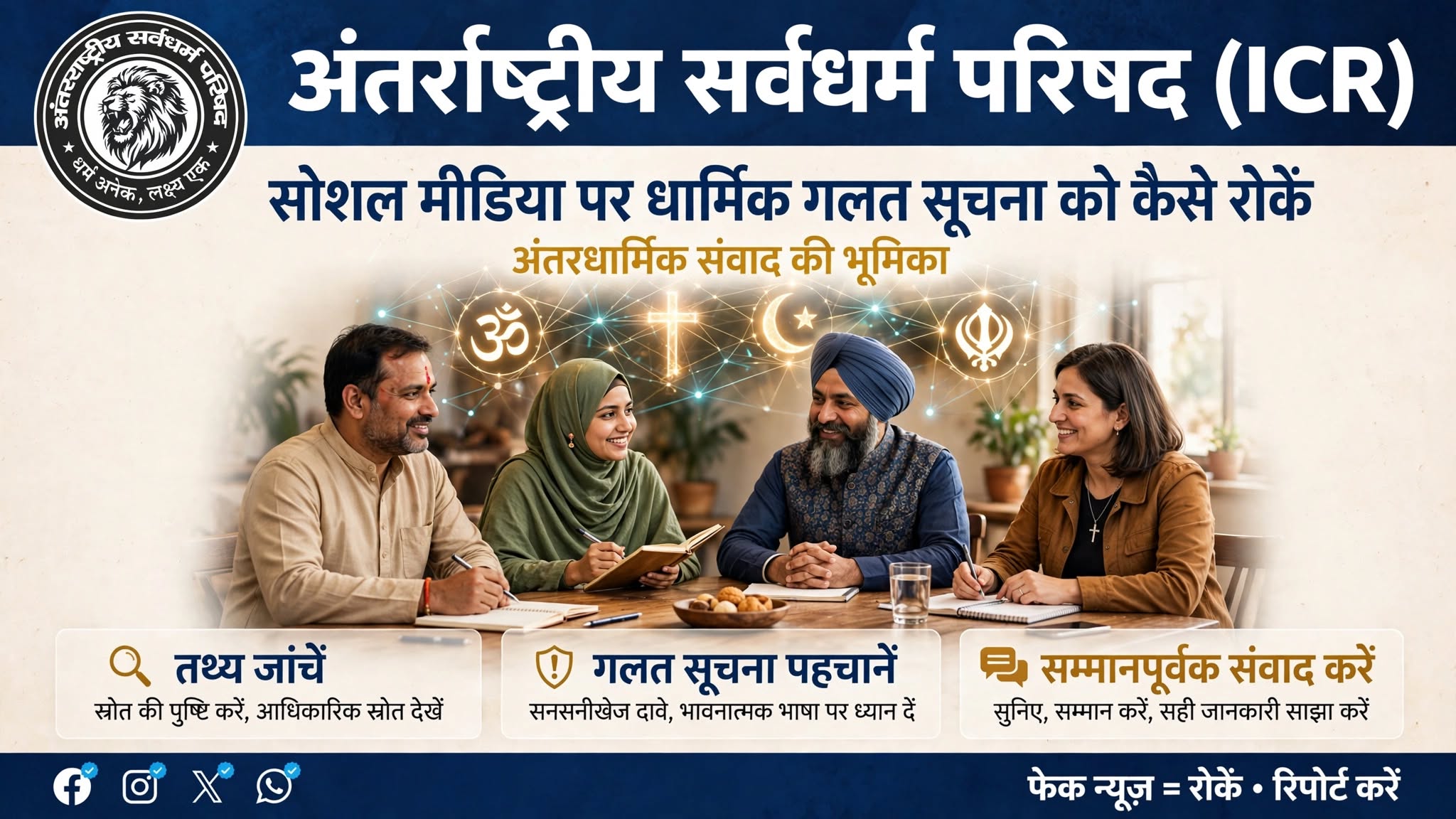
In an increasingly interconnected yet polarized 21st-century world, cultural and faith-based differences often become flashpoints for social tension and geopolitical friction. The International Council of Religions (ICR) stands as a paramount global platform designed to bridge theological divides, foster constructive interfaith dialogue, and mobilize religious leaders for global peacekeeping.
At its essence, the ICR brings together scholars, spiritual leaders, philosophers, policy advisors, and grassroots humanitarians representing the world’s major religious traditions—including Hinduism, Buddhism, Jainism, Sikhism, Christianity, Islam, Judaism, Bahá'í, Indigenous spiritualities, and secular ethics. Rather than seeking theological uniformity, the Council emphasizes shared ethical values: compassion, human dignity, justice, and non-violence.
2. Historical Background and Evolution of Global Interfaith Movements
The institutional concept of multi-faith councils traces back to the historic 1893 Parliament of the World's Religions in Chicago, where luminaries like Swami Vivekananda introduced Eastern philosophical pluralism to Western audiences. Over the decades, international bodies recognized that sustainable peace is unattainable without engaging faith communities.
Today, modern organizations like the International Council of Religions represent the evolution of this movement from symbolic gatherings into operational, action-oriented institutions capable of addressing contemporary crises.
3. Why ICR Matters: The Critical Need for Interfaith Councils Today
With over 84% of the world's population identifying with a religious tradition, faith remains one of the most powerful motivators of human behavior. The International Council of Religions addresses several critical global imperatives:
4. Core Operational Pillars and Strategic Programs of ICR
The operational architecture of the International Council of Religions is structured around four primary pillars designed for measurable societal impact:
|
Strategic Pillar |
Core Objective |
Actionable Key Initiatives & Deliverables |
|---|---|---|
|
1. Interfaith Diplomacy & Conflict Mediation |
Peacebuilding in high-tension regions |
Deploying neutral multi-faith peace envoys, conducting closed-door track-II diplomatic talks, and establishing regional harmony councils. |
|
2. Education, Research & Academic Exchange |
Dismantling prejudice and bias |
Publishing comparative religion curricula, funding research on interfaith ethics, and hosting annual international theological symposiums. |
|
3. Youth & Women Leadership Empowerment |
Inclusive grassroots transformation |
Empowering emerging young leaders and women spiritual scholars through international fellowships, mentorships, and digital peace campaigns. |
|
4. Humanitarian Action & Eco-Stewardship |
Cross-faith community service |
Mobilizing pooled humanitarian disaster response funds, tree plantation drives, and joint clean energy advocacy initiatives. |
5. Universal Ethical Principles: The Philosophical Bedrock of ICR
The Council’s methodology is rooted in the recognition of universal ethical maxims that transcend sectarian boundaries:
6. Key Benefits and Global Impact of ICR Initiatives
The tangible outcomes of international interfaith governance extend far beyond theological debate:
7. Frequently Asked Questions (FAQs) — Optimized for Search Intent
Q1. What does ICR stand for?
Answer: ICR stands for the International Council of Religions (also known in multilingual contexts as अंतरराष्ट्रीय सर्वधर्म परिषद). It refers to a global collaborative body dedicated to interfaith peace and harmony.
Q2. Is the International Council of Religions affiliated with a specific political ideology or single faith?
Answer: No. The ICR is strictly non-partisan, independent, and multi-faith. It provides an equitable, egalitarian platform where every spiritual tradition and ethical philosophy is granted equal voice and dignity.
Q3. How does ICR collaborate with international agencies like the United Nations?
Answer: ICR works alongside civil society networks, UNESCO, and UN initiatives to support Sustainable Development Goals—specifically SDG 16 (Peace and Justice) and SDG 17 (Partnerships for the Goals)—by mobilizing grassroots religious communities.
Q4. How can individuals, scholars, and youth participate in ICR programs?
Answer: Individuals can participate through regional interfaith chapters, youth leadership fellowships, academic webinars, research paper submissions, and local community service initiatives organized under ICR guidelines.
8. Conclusion: The Future of Global Faith Diplomacy
The International Council of Religions (ICR) is not merely a diplomatic forum; it is a vital catalyst for planetary survival and social cohesion. By translating ancient spiritual wisdom into contemporary actionable diplomacy, the ICR proves that religion can and must be an instrument of unity, healing, and enduring global peace.